Red Ginseng, Re-engineered for Absorption: Binotec Showcases “Daehan Sammaek” at CES 2026
- A proprietary fermentation strain converts ginsenosides into smaller molecules — 18 times higher Rg3 absorption in an animal study
- Overseas buyers took interest in the science of absorption; the first production run sold out at CLOUNGE stores in Korea
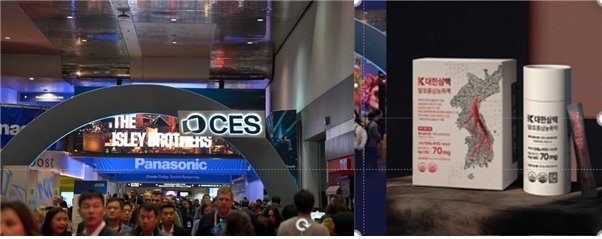
In January, CES 2026 — the world’s largest technology and consumer electronics show — filled Las Vegas with the latest devices. Alongside them, bio and healthcare companies from North America, Europe and Asia showcased fermented ingredients, functional foods, personalized nutrition and microbiome products. Among them was Binotec, a Korean tech-bio company led by CEO Yu-mi Kim, which brought one of Korea’s most traditional wellness foods to the stage: red ginseng. Its product is called Daehan Sammaek, a fermented red ginseng.
While many exhibitors emphasized unique ingredients or functional concepts, Binotec focused on a technology chain it describes as “molecular conversion, absorption design, functional expression.” The question it set out to answer was not how much of an ingredient goes in, but how well the body can actually absorb it.
Making big molecules small: the BNT L-408 strain
Ginsenosides, the key active compounds in red ginseng, are large molecules that the body struggles to absorb in their natural form. Binotec applies its own patented fermentation strain, BNT L-408 (Korean Patent No. 10-2869939), to convert these large ginsenosides into smaller, more absorbable forms. According to the company, after fermentation the smaller ginsenosides increased dramatically: Rg3 by 1,300%, Rg5 by 1,800% and Rk1 by 3,400%. Binotec describes this as design at the molecular level, fundamentally different from simple concentration or blending.
Each stick of the finished product contains about 100 mg of total ginsenosides, including about 70 mg of Rg3. Binotec also released absorption data: in an animal study, Daehan Sammaek showed 18 times higher Rg3 absorption and 17 times higher Rg5 absorption than a standard red ginseng concentrate. The company is also conducting joint research with the Korea Research Institute of Chemical Technology (KRICT) to broaden its functional evaluation.
What overseas buyers noticed: the science of absorption
Overseas buyers who met with Binotec at the show reportedly highlighted three strengths compared with conventional red ginseng and general functional foods: a scientifically clear absorption mechanism, technology-driven positioning suited to the premium healthcare and functional food market, and the technical story and product quality that North American and European markets expect.
The product has also been well received at home. Daehan Sammaek is sold at about 150 CLOUNGE stores across Korea through a distribution network operated by Conbinos and Familounge, and its first production run sold out upon launch.
“What global buyers at CES focused on most was not fermentation or the raw material itself, but the way technology completes the product’s performance,” said Yu-mi Kim, CEO of Binotec. “Through CES, we presented our platform technology for nano-bio materials along with our mass-production and commercialization capabilities, and made our direction as a tech-bio company clear.”
Beyond health food: toward global tech-bio wellness
Building on CES 2026, Binotec plans to expand overseas as a global tech-bio wellness company that combines molecular design, absorption science and functional validation — moving beyond the boundaries of traditional health foods. In July, the company also completed a KRW 25 billion GMP-certified manufacturing facility for cosmetics and health functional foods in Gyeongsan, Korea, giving it the capacity to produce everything from raw materials to finished products in-house.
Note: The absorption results described in this article come from an animal study and may differ from effects in humans. Daehan Sammaek is not a medicine and is not intended to prevent or treat any disease.